Wildlife Control
Wildlife is an important part of the natural environment, but when these animals begin using homes, crawlspaces, attics, decks, sheds, or yards as shelter, they can create property damage, health concerns, and safety risks.
Resolving a wildlife problem involves more than simply placing a trap. Our approach focuses on identifying the source of the problem and preventing it from recurring.

Inspection / Assessment
The first step is a thorough inspection of the property to determine:
• what species is involved
• where animals are entering or living
• areas of damage or vulnerability
• the most effective control strategy
Humane Trapping
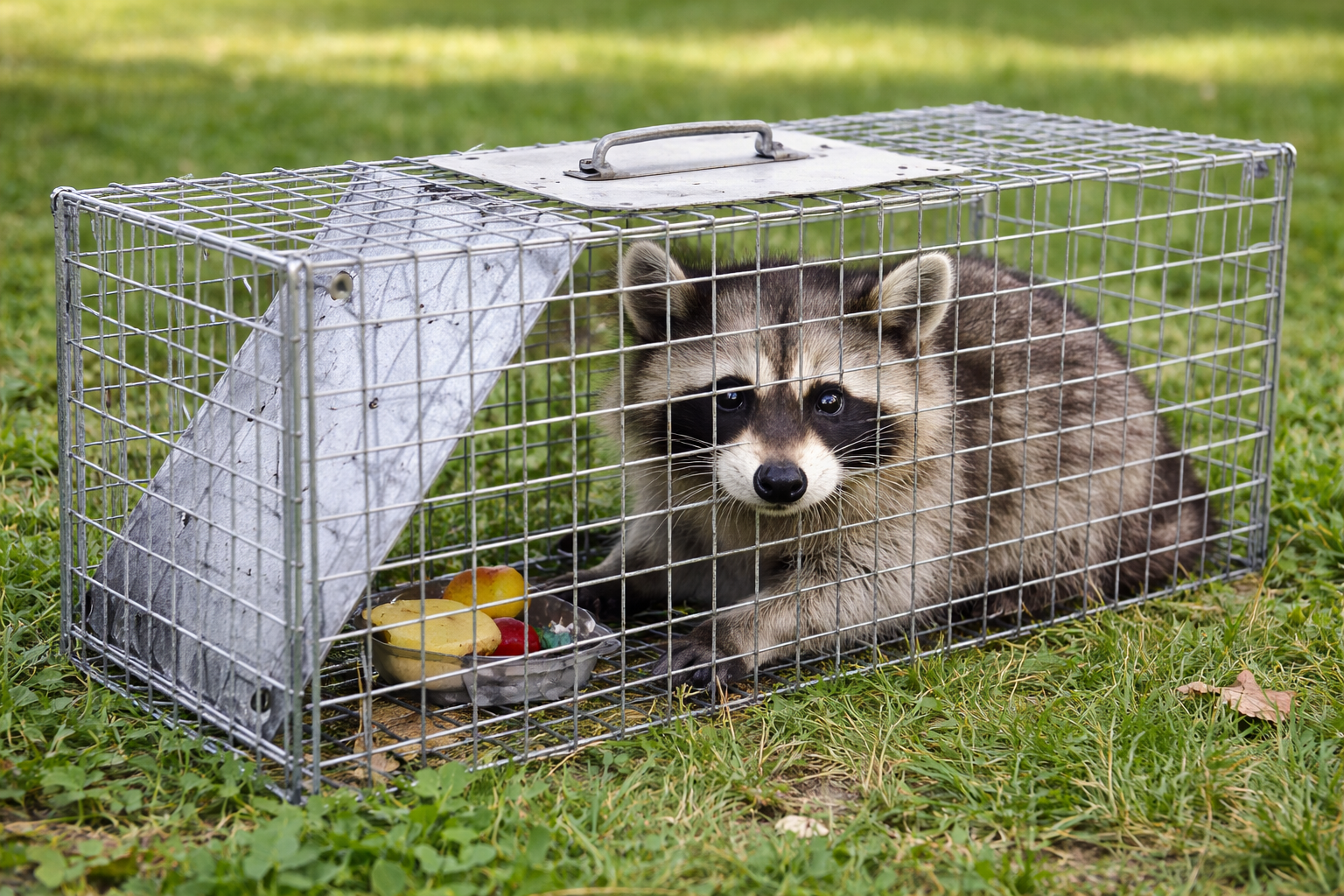
When appropriate, professional wildlife traps may be used to capture the animals responsible for the problem. Traps are placed strategically in areas where wildlife activity has been confirmed. These traps are designed to safely capture animals while minimizing stress and risk of injury. Trapping plans are tailored based on the species involved, the property layout, and local wildlife regulations. Once captured, animals are handled according to Indiana wildlife regulations and accepted wildlife control practices. Our goal is always to resolve the conflict safely and responsibly.

Exclusion Devices
An exclusion device is not a trap and it does not capture the animal. Instead, it is a one-way device installed over the wildlife entry point that allows the animal to exit the structure, but prevents it from getting back inside. Once the animal leaves the attic, crawlspace, soffit, or other area, it cannot re-enter through that opening.
Entry Point Repairs & Prevention
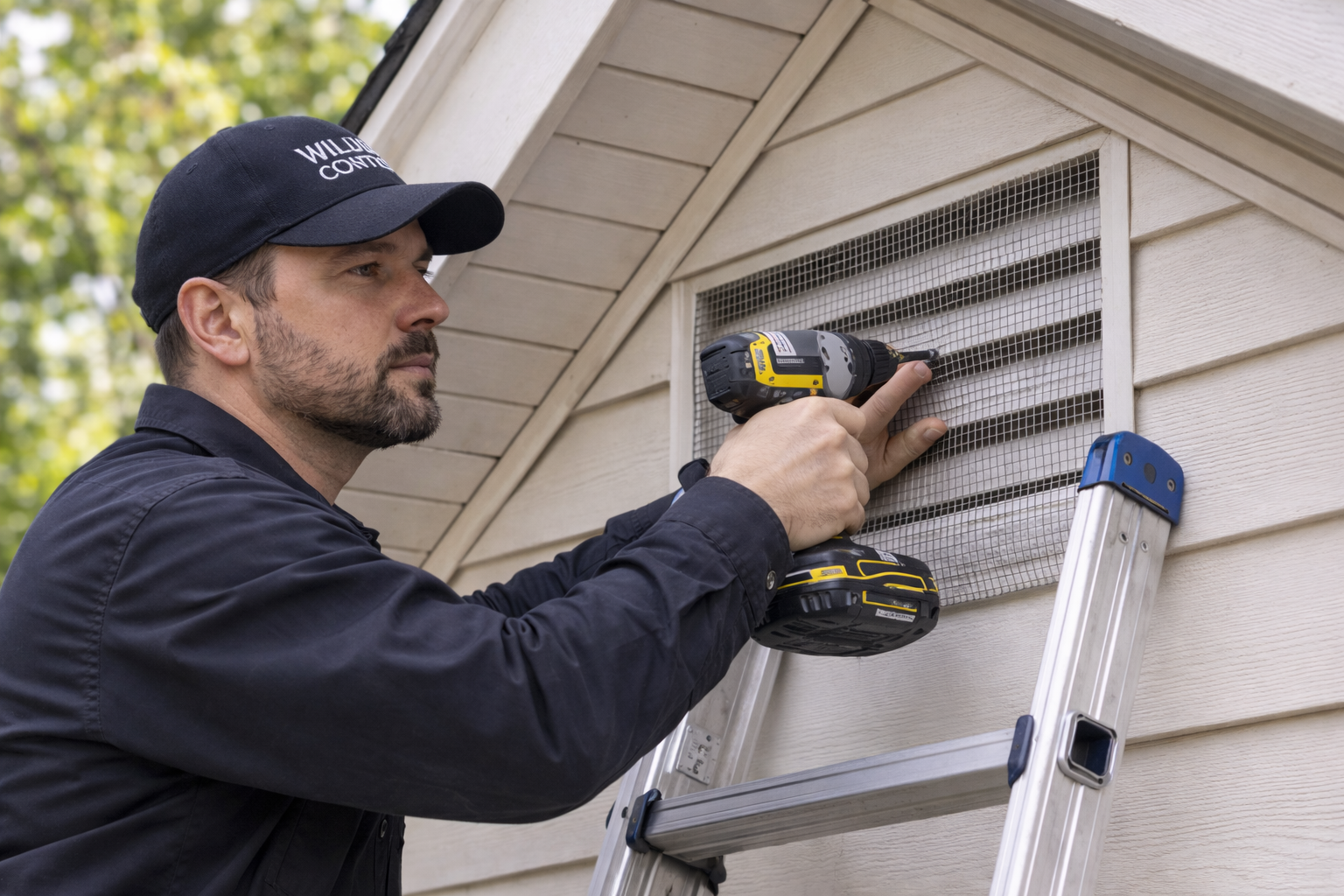
In many situations, wildlife will return to the same location unless the entry point or habitat conditions are addressed.
Prevention recommendations may include:
• sealing structural entry points
• installing vent screens or chimney caps
• repairing damaged soffits or siding
• reinforcing crawlspace openings
• removing attractants around the property
Preventative repairs are often the most important step in long-term wildlife control.